Direct on provider
Add your card in the billing portal. Most major Canadian utilities charge $0 fee and process instantly.
Utilities guide · Canada · September 2026
Hydro, gas, internet, phone, and insurance are some of the easiest recurring bills to put on a Canadian credit card — most major providers accept cards directly with no convenience fee.
Fast answer
Cheapest option
Direct on provider site
Often $0 fee, full rewards
Best for rewards
Amex Cobalt / 2x cards
Recurring spend = compounding points
Best overall
Direct + auto-pay
Zero effort, monthly cashback
For most Canadians, set up auto-pay directly on each provider's website with a 2% rewards card. If a provider doesn't accept cards (some smaller utilities, municipal water), Neobanc routes the payment via Interac at $0 fee with 1% cashback.
Yes — utilities are the most common recurring Canadian bills you can put on a credit card. Almost every major provider accepts Visa, Mastercard, and (often) Amex through their billing portal at no extra fee.
Common examples that accept cards directly in 2026:
For anything that doesn't take cards (some municipal water utilities, condo fees, smaller electricity co-ops), the workaround is the same one Canadians use to pay rent with a credit card in Canada: route through Neobanc by Interac e-Transfer at $0 fee.
Homeowners optimizing recurring bills usually look at municipal costs in the same pass — see the best credit cards for property tax payments for the once-a-year lump sum your utilities setup won't cover.
How it works
Add your card in the billing portal. Most major Canadian utilities charge $0 fee and process instantly.
For providers that don't accept cards: pay Neobanc by Interac, Neobanc pays the utility, you earn 1% cashback at $0 fee.
One setup, monthly cashback for years. ~$300/mo bills × 2% = $72/year of free rewards.
Utilities are smaller than rent or mortgage but happen 12 times a year. On a typical Canadian household paying ~$300/month across phone, internet, and hydro, that's $3,600 of annual spend — $54–$72 in cashback at 1.5–2% with zero added effort once auto-pay is set.
The convenience tradeoff: if a provider charges a 1.5%+ fee, the math gets thin. Always check the provider's fine print before opting in.
When it makes sense
When it doesn't
"Utilities" covers a wider range of bills in Canada than most people assume, and card acceptance follows how competitive the industry is. Providers that compete for customers month to month — telecom, internet, insurance — accept cards eagerly because card-on-file billing reduces their churn and collection costs. Regulated monopolies have less incentive, which is why municipal water is the category most likely to refuse cards outright.
Mobile and home phone, home internet and TV bundles, and home, tenant and auto insurance premiums. These are the bills where a card on file is the default option rather than an alternative payment method.
Electricity and natural gas from the large distributors. Acceptance is common, but some providers route card payments through an outside processor that adds its own service charge — the charge appears at checkout rather than on your bill, so it is easy to miss.
Municipal water and waste, small rural electricity co-ops, condo maintenance fees, and any bill you currently pay through your bank's bill-payment list rather than a provider portal. These are the cases where a payment platform is the only route to rewards. Condo fees have their own considerations, covered in our guide to paying condo fees with a credit card.
When a provider will not take your card, a payment platform sits in the middle. You pay the platform using the method it supports, the platform pays your provider using a method the provider accepts — usually Interac e-Transfer, electronic funds transfer or a cheque — and you receive the rewards attached to how you funded your side of the transaction.
Two details decide whether the arrangement is worth using. The first is the funding method, because it determines whether you earn card rewards at all. The second is settlement timing: the platform needs a few business days to deliver funds, so a bill due on the first of the month has to be initiated several days earlier. Missing that window turns a rewards play into a late fee.
The two platforms Canadians use most work differently enough that the choice matters. Neobanc is funded by Interac e-Transfer with no platform fee and returns cashback on eligible payments, which suits bills where you simply want a positive return with no maths. Chexy charges a service fee and earns transferable points, which suits people who value points above their cash equivalent. We compare both side by side in the Chexy vs Neobanc comparison, and the current offers page tracks whichever signup bonus is live.
There are three places a fee can appear, and they are easy to confuse. A provider convenience fee is charged by the utility, typically 1.5% to 2.5%, and is disclosed at checkout. A platform service fee is charged by a payment service and is usually a flat percentage of the bill. A card-side cost is not a fee at all but a reduction in value: some cards pay a lower rate on bill payments, or exclude them from a promotional bonus.
The decision rule is a single comparison. Work out what a dollar of spending is actually worth on your card, then compare it to the total fee percentage. Cashback is straightforward — 2% cashback is worth 2 cents per dollar. Points need a redemption assumption, and it should be conservative: value them at what you reliably redeem for, not at the best-case transfer partner you have never actually used. Our guide on travel points versus cashback walks through realistic Canadian valuations.
Take a household with a $95 mobile plan, $85 internet, $95 hydro and $65 insurance — $340 a month, or $4,080 a year. Assume the telecom, internet and insurance bills ($245 a month, $2,940 a year) accept cards with no surcharge, and hydro adds a 1.75% convenience fee.
The pattern holds across most Canadian households: nearly all the value comes from the fee-free bills paired with the right card, not from forcing a fee-bearing bill onto plastic. To pick the card, start with the best cashback credit cards in Canada or browse the full credit card catalogue.
A few practical constraints catch people out, and all of them are easier to check before the first payment than after.
Recurring bills reward a setup-once approach rather than ongoing optimisation. Put every fee-free bill on the card with the strongest recurring-bill or telecom category and leave it there; the compounding comes from consistency, not from switching cards each quarter.
Two timing tricks are worth knowing. Bills are predictable, which makes them the cleanest way to hit a welcome bonus minimum spend without changing your budget — useful when a new card requires a few thousand dollars in the first three months. And because insurance premiums are often billed annually, choosing the annual option concentrates a large charge into whichever statement period you want it in.
Finally, keep fee-bearing bills separate in your thinking. A fee is only justified when it buys something you cannot otherwise get — meeting a bonus threshold, preserving cash flow for a few weeks, or earning points at a genuinely higher value. The same logic applies to larger payments covered in our guides to property tax payments and insurance premiums.
Best setup · Recurring bills
Park hydro, internet, phone and streaming on a single recurring-bill multiplier card to compound 5x earn on autopilot.
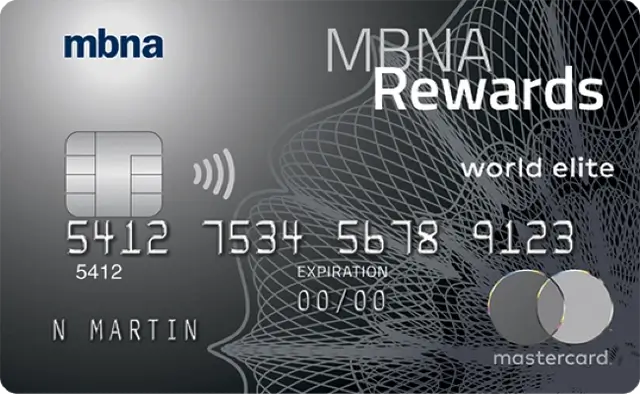 $100
$100Anchor card
MBNA Rewards World Elite Mastercard
MBNA · Mastercard · $120/yr
Why: 5x on the first $50k of recurring spend, first-year free — strongest bills-only earn in Canada.
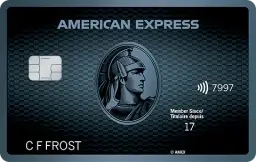 $40
$40Backup category card
American Express Cobalt
American Express · Amex · $156/yr
Why: Adds 5x on groceries and 4x on dining when MBNA categories don't apply.
Tradeoff: Only works if your provider accepts credit cards at $0 fee. Some utilities pass a 1.5–2.5% surcharge — check first.
Related guides
Pay tuition with a credit card in Canada
Big one-shot bill — perfect for welcome bonuses.
Read guideBest credit cards for Canadian recurring spend
Amex Cobalt and 2x cards optimized for bills.
Read guideCompare rent payment platforms
Same workaround, monthly rent edition.
Read guidePay mortgage with a credit card in Canada
The largest recurring bill — Interac via Neobanc.
Read guideFAQ