Cash Back Credit Cards · Canada · Updated September 2026
Best Cash Back Credit Cards in Canada (2026)
Cash back credit cards in Canada, ranked by real net value rather than headline earn rates. Every card below is scored on the cash back rewards it realistically returns in year one after the annual fee, and we weight rent and recurring bills heavily because that's where the math usually breaks down.
Editorially independentNo paid placementsNet value after feesUpdated September 2026See methodology →
Offers cross-checked against Canadian sources (Great Canadian Rebates, FinlyWealth, CreditCardGenius, High Interest Savings, RateHub). We earn a referral fee on some links — it never changes our ranking. Affiliate disclosure.
Estimated first-year values assume typical Canadian spending and realistic point redemptions. Actual rewards vary based on redemption method and individual spending behaviour.
Quick answer
Which cash back credit card in Canada pays the most?
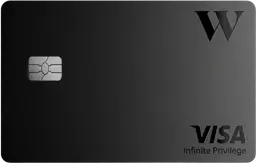
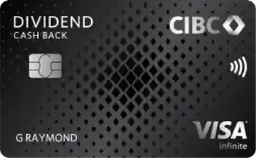
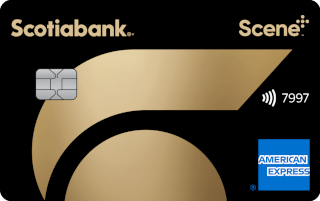
It depends on your spending habits. For everyday purchases across every purchase category, the Wealthsimple Visa Infinite pays unlimited 2% (5% on the first $10,000 during your first 30 days) with a waivable monthly fee — the strongest simple cash back card we track. If most of your money goes to gas and groceries, the CIBC Dividend Visa Infinite (4% on both) and Scotia Momentum Visa Infinite (4% groceries and recurring bills) earn more, and both waive the annual fee in year one.
Editor's picks
Our top recommendations
Auto-selected from the cards in this category — across overall pick, best value, beginner-friendly and premium tiers.
First Year Free plus up to 70,000 VIPorter Points and a round-trip companion pass after just $1,000 in qualifying spend (offer runs through October 31, 2026) makes this an emerging keeper for Porter flyers in Toronto, Ottawa, Halifax and Montreal.
Why this ranked: Ranked highly on estimated first-year value (~$1100 after fees).
Quietly one of the best household-expense optimizers in Canada: 5x on restaurants, groceries, digital media, memberships and utilities with a low fee makes it a strong keeper.
Bonus
$300
Annual fee
$120/yr
+$180 est. rent rewards via Neobanc · after payment costs
Best for porter airlines loyalists in eastern canada
Estimated 1st-year net value
+$1,100
First year free — annual fee waived in year 1
First Year Free plus up to 70,000 VIPorter Points and a round-trip companion pass after just $1,000 in qualifying spend (offer runs through October 31, 2026) makes this an emerging keeper for Porter flyers in Toronto, Ottawa, Halifax and Montreal.
Bonus
$800
Annual fee
First Year Free
+$280 est. rent rewards via Neobanc · after payment costs
We filtered to credit cards for cash back (or with cash-equivalent earn), then ranked by estimated cash back value net of fees. Flat-rate Visa Infinite cards win for rent through Neobanc; category cards with a higher earn rate on gas and groceries win when your spending habits are concentrated.
We re-verify every offer monthly and recalculate estimated first-year value using the current signup bonus, annual fee and a typical Canadian spending profile. See how we review for the full methodology.
Overview
Best Cash Back Credit Cards in Canada at a glance
We currently track 36 cash back credit cards and rank them by estimated first-year value — the signup bonus plus a realistic year of rewards, minus the annual fee. Across this shortlist, annual fees range from $0 to $799, and estimated first-year value tops out at +$2,400 with the American Express Business Platinum. 17 of these cards cost nothing to hold in year one, so you can start earning without a recurring cost.
Beyond our top pick, the CIBC Dividend Visa Infinite and American Express Platinum round out the leaders in this category. The full ranking spans issuers like American Express, CIBC, MBNA, Scotiabank, and BMO, so acceptance and banking preferences won't box you into a single option. 5 of the cards here waive the standard 2.5% foreign-transaction fee, which matters if you travel or shop in US dollars.
How to choose the right card for you
Start with how you actually spend. Among the 36 cash back credit cards we track, 17 keep costs at $0 in year one while the rest justify a fee through richer rewards or perks. If you want predictable value with no math, a low- or no-fee flat-rate card is the safest keeper. If your spending is concentrated in specific categories — or in large recurring payments like rent, tuition and bills — a card with the right multipliers and the right rent-payment platform pairing usually earns more. Cards that shine on recurring bills tend to pair well with platforms like Chexy or Neobanc for eligible payments, where accurate. Weigh each annual fee against the first-year value shown: a fee is only worth paying when the rewards and perks clearly exceed it.
How to choose the best cash back credit card in Canada
A cash back credit card is the simplest way to earn money back on spending you already do. There are no points charts, no transfer partners and no blackout dates — every cashback reward is real dollars. This guide explains how cash back credit cards in Canada work, how earn rates and redemption rules differ between card issuers, and how to match a cash back card to your own spending habits — whether you want a flat cash rebate on everything or a higher rate on gas and groceries.
Our selection
How we choose the best cash back credit cards
Every card in the ranking above is a Canadian credit card offer we track directly from the card issuer. We include a card when it pays a percentage-based cash back reward, or earns points that convert reliably to cash-equivalent statement credits. We then rank on four things, in this order:
Value after the annual fee. A 4% earn rate behind a $120 fee is not automatically better than a flat 2% at $0. We score what a realistic Canadian household keeps.
Breadth of the earn rate. Cards that pay well across everyday purchases rank above cards that need a narrow purchase category to shine.
Recurring bills and rent. These are the largest line items in most Canadian budgets, so a card that earns on utilities, phone, insurance and rent-routed payments gains ground.
Ease of redemption. Automatic statement credits beat annual-only payouts and beat anything with a high minimum cash back balance.
We don't rank on advertised headline rates, and placement is never sold. Read the full review methodology for the scoring detail, or browse the whole credit card comparison if you want cards outside the cash back category.
Our picks
Best cash back cards by category
There is no single best cash back card for every Canadian. These are the picks by use case, drawn from the same estimated-value model that orders the table above.
Use case
Our pick
Why
Best overall
CIBC Dividend Visa Infinite
4% on gas and groceries, 2% on dining, transit and recurring bills, annual fee waived in year one — the highest estimated first-year cash back value we model.
Best no-fee cash back card
Wealthsimple Cash Card (Visa Infinite)
5% cash back on the first $10,000 in net purchases during your first 30 days, then unlimited 2% on everything — plus a $25 referral bonus through PaySmarter, and a monthly fee that is waived for qualifying clients.
Best for groceries
Scotia Momentum Visa Infinite
4% on groceries and recurring bills, 2% on gas and transit — strongest for households with a large weekly grocery shop.
Best for gas
CIBC Dividend Visa Infinite
One of the few Canadian cards paying 4% on gas and groceries together, which suits commuters and families in one card.
Best premium cash back card
TD CashBack Visa Infinite
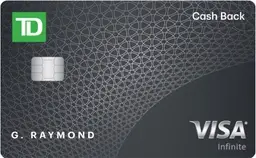
3% on groceries, gas and recurring bills with Visa Infinite insurance and TD Auto Club membership included.
Best cash back Mastercard
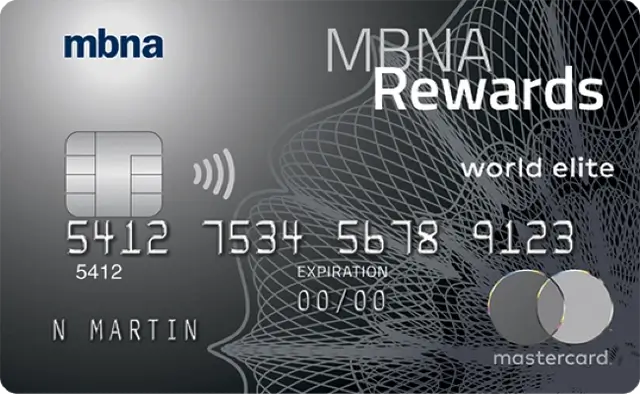
MBNA Rewards World Elite Mastercard
5x points on restaurants, groceries, digital media and utilities (subject to caps), redeemable as cash-equivalent statement credits where Amex isn't accepted.
Best for rent
Flat 2% card + Neobanc
$0 platform fee plus 1% Neobanc cashback stacks with a 2% card for roughly 3% net on a payment that normally earns nothing.
Earn rates, welcome offers and fee waivers change; the live table above is the current source of truth and always reflects the offer we last verified with the card issuer. Confirm the terms and conditions on the issuer's own application page before you apply.
The basics
How cashback credit cards work
A cashback credit card pays you a percentage of every eligible purchase as a cashback reward. Spend $1,000 on a 2% cashback card and you earn $20 in cashback — the cashback balance simply grows as you use the card. Because the value is fixed in dollars, a cashback credit is far easier to understand than travel points, which change value depending on how you redeem them.
Most cards pay a flat rate on everything, a higher rate in specific purchase categories, or a blend of both. The goal is always the same: earn cash on the spending you would do anyway, then redeem that cashback reward as a statement credit or a deposit through online banking.
Two earning styles
Flat-rate vs category-based cash back
Almost every cash back card in Canada follows one of two designs. A flat-rate card pays the same percentage on everything; a category-based card pays a high rate in a few purchase categories and a base rate elsewhere. Neither is universally better — the winner is decided by how concentrated your spending is.
Factor
Flat-rate card
Category card
Typical earn rate
1.5%–2% on every purchase
3%–4% in bonus categories, 1% elsewhere
Caps
Usually none
Often an annual or quarterly spending cap
Effort
None — one card for everything
You have to route spending to the right card
Best suited to
Varied spending, renters, one-card setups
Families with big grocery, gas and bill totals
A quick way to decide: add up your gas, groceries and recurring bills for a typical month. If that total is under roughly a third of your card spending, the flat-rate route usually earns more once you account for the annual fee. Above that, a category card pulls ahead — and many Canadians end up holding one of each, putting bonus categories on the category card and everything else on the flat 2% card.
Which is cheaper for you
No-fee vs annual fee cash back cards
An annual fee is not a penalty — it's a purchase. You are buying a higher earn rate, and it only makes sense when the extra cash back rewards clearly exceed what the card costs you each year.
Annual card spend
Flat 2%, $0 fee
4% on gas & groceries + 1% rest, $120 fee
$12,000 ($3,000 in bonus categories)
$240
$90 net
$24,000 ($9,000 in bonus categories)
$480
$390 net
$36,000 ($18,000 in bonus categories)
$720
$780 net
These are illustrative figures, not quotes, but the pattern holds: fee-charging category cards need real volume inside their bonus categories before they beat a simple money back card. Two details change the maths in your favour — a first-year-free waiver, which removes the fee entirely for twelve months, and a monthly fee your card issuer waives when you hold assets or set up a direct deposit.
If you would rather never pay for a card, our best no-fee credit cards in Canada ranking covers every $0-fee and first-year-free option we track, and newer cardholders may find our best beginner credit cards list easier to get approved for.
Choosing a reward type
Cashback vs travel rewards
The right reward type depends on how you spend and how you want to redeem. A cashback card gives predictable value you can use for anything; a travel card can deliver more value per dollar, but only when you redeem points for flights or hotels.
Factor
Cashback card
Travel rewards card
Value
Fixed cash, always 1¢ = 1¢
Variable, higher on premium flights
Flexibility
Spend on anything
Best for travel only
Effort
None — earn cash automatically
Requires planning redemptions
Best for
Everyday purchases, recurring bills
Frequent travellers
If you rarely travel or simply want to earn money back without tracking award charts, a cashback credit card is the better fit. Compare both approaches in our credit card rewards guide.
Fee math
When an annual fee is worth paying
A no-fee cashback card is ideal for light or unpredictable spenders. But a card with an annual fee can earn far more if its higher earn rate in your top purchase category outweighs the cost. The rule of thumb: a fee is worth paying when your extra cashback reward over a year is comfortably larger than the annual fee.
For example, a $120 annual fee that boosts groceries from 2% to 4% pays for itself once you spend about $6,000 a year on groceries. If your spending is below that, a $0-fee flat-rate cashback card keeps more cash in your pocket.
Earn structure
Fixed vs rotating bonus categories
Fixed categories pay the same boosted rate all year — for example 4% on gas and groceries every month. They reward predictable spenders who don't want to track anything.
Rotating categories change each quarter and often require activation. They can pay a very high rate, but only on whatever the card issuer chooses that quarter, and usually up to a spending cap. If you'll forget to activate, a fixed-category or flat-rate cashback card earns more reliably.
Redemption
Statement credits vs direct cashback deposits
How you receive your cashback depends on the card issuer's redemption rules. The two most common methods are statement credits and direct deposits.
Statement credits apply your cashback balance against your card balance, lowering what you owe. The cash never leaves the card, but it directly reduces your bill.
Direct cashback deposits move your cashback into a chequing or savings account via online banking — useful if you want the cash in hand rather than a credit on the card.
Some cards pay out automatically once a year; others let you redeem any time the cashback balance crosses a minimum. Always check the card issuer's terms so you know when and how you can access your cashback reward.
Maximising cashback
Earn rates and how they work
Your earn rate is the percentage of cashback you receive per dollar. Matching earn rates to your real spending is the single biggest driver of how much cash you earn. Look at where your money actually goes:
Purchase categories
Category cards pay more in defined purchase categories such as gas, groceries, dining or transit. If most of your spend lands in one or two categories, a category cashback card beats a flat-rate one.
Recurring bills
Some cards pay a boosted rate on recurring bills like utilities, phone and streaming. You can extend cashback even further to rent and mortgage — payments that normally earn nothing — by routing them through a rent platform. See paying rent with a credit card and our mortgage payment guide for the full mechanics.
Everyday purchases
For spending that doesn't fall into a bonus category, a flat-rate cashback card earns the same on everything — the safest choice when your spending habits are varied or hard to predict.
The fine print
Redemption rules and important terms
Earning cashback is only half the story — redemption rules decide how easily you actually get it. Before you apply for any credit card offer, read the terms and conditions for these details:
Good standing: most card issuers require your account to be in good standing (no missed payments) to redeem your cashback balance.
Caps and tiers: boosted earn rates often apply only up to an annual spending cap, after which you earn the base rate.
Eligible purchases: cash advances, balance transfers, interest and fees never earn a cashback reward.
Minimum redemption: some cards require a minimum cashback balance before you can redeem through online banking or as a statement credit.
Carrying a balance: interest charges quickly erase any cashback credit, so cashback cards only pay off when you clear the balance in full each month.
Card-by-card
Featured cashback cards compared
Here's a deeper look at the standout cashback cards in our ranking, including who each card suits and who should look elsewhere. Exact rates and welcome offers are confirmed against each card issuer in the live table above.
Wealthsimple Cash Card (Visa Infinite)
Best for
Flat-rate cashback with no annual fee
Ideal spending habits
Varied, unpredictable spending across many categories
Annual fee
$20/month ($240/year), waived with $100,000+ in Wealthsimple assets or a qualifying monthly direct deposit
Earn rates
5% cash back on the first $10,000 in net purchases in your first 30 days, then unlimited 2% cash back on every purchase
Welcome offer
5% welcome-period cash back on the first $10,000 (first 30 days), plus a $25 referral bonus through PaySmarter
Redemption options
Cashback deposited to your Wealthsimple Cash balance via online banking
Visa Infinite eligibility
Carries Visa Infinite branding without the usual income test
Pros
5% welcome-period cash back on the first $10,000
$25 referral bonus through PaySmarter
Fee waivable — simple unlimited 2% ongoing rate
Cons
5% rate is introductory only — 2% after 30 days or $10,000
Monthly fee applies unless you meet the waiver conditions
Who should choose it: Renters and everyday spenders who want a $0-fee cashback card that earns on everything.
Who should avoid it: Heavy grocery and gas spenders who would earn more from a category card.
Scotia Momentum Visa Infinite
Best for
Category cashback on groceries and recurring bills
Ideal spending habits
Concentrated spending on groceries, gas and recurring bills
Cashback redeemable as a statement credit, with an annual payout option
Visa Infinite eligibility
Visa Infinite eligibility: ~$60,000 personal or $100,000 household income
Pros
4% on both gas and groceries
Solid 2% mid-tier categories
Reliable everyday cashback card
Cons
Annual fee after intro year
Income requirement applies
Who should choose it: Drivers and families who want one card covering gas and groceries at 4%.
Who should avoid it: Renters chasing the simplest flat-rate setup with no fee.
Choosing
Matching a card to your spending habits
Pull three months of statements and total your spending by purchase category. Whichever pattern below matches yours points to the card type that earns the most, and the answer is often two cards rather than one.
Spending spread thinly across everything. Take the flat-rate route. A single 2% card with no annual fee beats a category card you can't feed.
Heavy gas and groceries. A 4% category card is worth the fee once those two lines clear roughly $500 a month combined.
Large recurring bills. Utilities, phone, internet and insurance add up quietly. A card with a recurring-bills category earns on all of it — see our guide to paying utilities with a credit card.
You travel two or more times a year. Compare the two reward types honestly in cash back vs travel rewards before defaulting to cash.
One practical caveat: a card only earns what you can pay off. Cash back is worth 1–4%, while interest on a carried balance runs about 20%, so the best cash back card is always the one you keep in good standing.
Methodology
How PaySmarter calculates card value
The dollar figures beside each card are estimates, not promises. For every card we model a representative Canadian household budget — groceries, gas, dining, transit, recurring bills and everyday purchases — apply the card's published earn rate to each purchase category, add the welcome offer we can currently verify, then subtract the annual fee (counting the waiver when a card is first-year free). The full walkthrough lives in how net value is calculated.
Points-earning cards are converted to a cash-equivalent value using a conservative redemption assumption, so a points card is never flattered against a straight cash back card. Where a payment platform is involved, we also subtract the platform fee — the same arithmetic explained in how we estimate payment fees.
Your own result will differ, because your spending does. Treat the ranking as a shortlist and the figures as a like-for-like comparison between cards rather than a forecast of your cashback balance.
The biggest opportunity
Earning cashback on rent
Rent is most Canadians' largest monthly payment, and it usually earns nothing. Routing it through a rent platform turns it into a cashback opportunity. Pairing a 2% cashback card with Neobanc's Interac route can net roughly 3% on rent ($0 platform fee plus 1% Neobanc cashback), while Chexy users pay a 1.75% platform fee in exchange for optional credit-bureau rent reporting.
Compare the platforms and the best cards for the job:
Still deciding between simple cash back and points? Our guide on travel rewards vs cashback breaks down which rewards strategy is better for your everyday spending, annual fees, and welcome bonuses.
Best cash back cards for groceries, gas, bills, dining and everyday spending
Most Canadian budgets concentrate in five places. Here is which type of card earns the most in each, and what to watch for.
Groceries
Groceries are the single largest bonus-category opportunity for most households. A 4% grocery rate on a $900-a-month shop returns about $430 a year against roughly $110 on a flat 2% card. Watch the annual cap, and check whether warehouse clubs and superstores code as groceries with your card issuer — many don't. The Scotia Momentum Visa Infinite review walks through its grocery category in detail.
Gas and transit
Commuters gain the most from a card that pays a boosted rate at the pump. Very few Canadian cards pay a top rate on gas and groceries at the same time — the CIBC Dividend Visa Infinite review covers the main exception. If you drive rarely, don't pay a fee for a gas category you won't fill.
Recurring bills
Hydro, internet, phone, insurance and streaming are predictable, so a recurring-bills category compounds quietly all year. Set each biller to autopay on that card and the cash back arrives without any further thought. Our best cards for recurring bills ranking is built for exactly this profile.
Dining
Dining is where points cards usually out-earn cash back cards, because restaurant multipliers on points programs are unusually generous. If dining is one of your top two categories, read cash back vs travel rewards before committing to a straight percentage card.
Everyday purchases
Pharmacy runs, hardware stores, online shopping and one-off spending rarely fit a category, and this is exactly where a flat-rate money back card earns its keep. The Wealthsimple Cash Card review covers the strongest unlimited flat rate we track, and you can filter every option side by side in our full credit card comparison.
Year one vs year three
Welcome offers vs long-term earning rates
A welcome offer is a one-time event; the earn rate is what you live with. A $300 first-year bonus looks bigger than a 0.5% rate advantage — but on $25,000 of annual spending that half point is worth $125 every year, so it overtakes the bonus in the third year and keeps going.
Keeping the card long term? Weight the ongoing earn rate and the fee you'll pay from year two onward. A card you hold for five years is decided almost entirely by its rate.
Only holding it a year? Chase the welcome offer and the fee waiver, then diarise a decision at month eleven to downgrade or cancel before the fee posts.
Check the qualifying conditions. Many credit card offers require a minimum spend inside the first three months, and some exclude existing customers of that card issuer. The terms and conditions on the application page are the only version that counts.
Our estimated first-year values include the welcome offer, which is why year-one rankings can differ from the card you'd want to keep. The card breakdowns above list both figures so you can see which cards win on earning cash back over time rather than on a single sign-up bonus.
Practical habits
How to maximize cash back through the year
Put every fixed bill on autopay. Rent, utilities, phone, insurance and subscriptions are the easiest cash back to earn because you never have to remember anything.
Use two cards, not five. A category card for gas and groceries plus a flat-rate card for everything else captures most of the available value without turning spending into admin.
Front-load big purchases. Time appliances, tires, tuition or a new laptop to land inside a welcome-offer window or an elevated introductory rate period.
Watch your category caps. Once a bonus category hits its annual cap, move that spending to your flat-rate card for the rest of the year — the cap is where most cash back quietly leaks away.
Check the cash back balance quarterly. Log into online banking, confirm the statement credits posted as expected, and redeem if your card requires a manual request.
Reassess every twelve months. Spending habits shift — a new commute, a baby, a move — and so do credit card offers. A ten-minute review each year usually finds money.
What costs Canadians money
Common cash back mistakes to avoid
Carrying a balance. Interest near 20% wipes out a 2%–4% return many times over. Cash back only works on a card paid in full each month.
Paying a fee your spending can't justify. Run the simple arithmetic above before upgrading to a premium Visa Infinite card for a category you barely use.
Assuming every purchase codes the way you expect. Grocery aisles inside a big-box store, gift-card purchases and third-party bill payments frequently earn the base rate only.
Overspending to chase a bonus. A $200 welcome offer isn't a gain if you bought $600 you didn't need to reach the minimum spend.
Leaving the cash back unredeemed. Some issuers require a manual redemption above a minimum cash back balance, and an account that falls out of good standing can forfeit it.
Ignoring rent and bills. For most renters, the largest untapped cash back sits in the payment that currently earns nothing at all.
Related guides
Keep comparing
Cash back is one route to rewards. If you want to see how it stacks up against the alternatives, or you're shopping with a different priority, these guides pick up where this one ends.
The Wealthsimple Visa Infinite offers 5% cash back on the first $10,000 in net purchases during your first 30 days, then unlimited 2% on every purchase, plus a $25 referral bonus through PaySmarter — currently the strongest no-cap, no-category Canadian cashback card. Its $20/month ($240/year) fee is waived for qualifying clients.
Only if your spending matches the categories. Cards like Scotia Momentum Visa Infinite earn 4% on groceries and gas but just 1% on everything else. If you spend heavily in the bonus categories, they win — otherwise a flat 2% card is more consistent.
Yes through Neobanc's Interac route ($0 fee + 1% Neobanc cashback). A 2% flat card stacks to roughly 3% net on rent. Chexy charges 1.75% which leaves only 0.25% on a 2% cashback card.
There's no single winner — it depends on your spending habits. The Wealthsimple Visa Infinite is the best flat-rate pick at unlimited 2% cash on every purchase — 5% during the first 30 days on the first $10,000 — with a waivable monthly fee. If most of your spend is gas, groceries and recurring bills, a category card like the Scotia Momentum Visa Infinite earns more thanks to its 4% purchase category rate.
Cashback cards are simpler and more flexible — you earn cash, not points, and there are no redemption charts or blackout dates. Travel rewards cards can deliver more value per dollar when you redeem points for flights, but only if you travel often. For most Canadians who want predictable value, a cashback credit card wins on ease of use.
Visa Infinite is a premium Visa tier that adds perks like mobile device insurance, concierge and travel coverage. A Visa Infinite cashback card (such as the Wealthsimple Cash Card or Scotia Momentum Visa Infinite) pairs those perks with cashback earn rates. Visa Infinite eligibility usually requires a minimum personal income of $60,000 or household income of $100,000.
Statement credits apply your cashback reward directly against your card balance, reducing what you owe. Other card issuers deposit cashback into a bank or chequing account via online banking, or pay it out once a year. Either way the cashback balance is yours to use — statement credits just keep the money on the card instead of moving it to cash.
For personal spending, cashback rewards are generally treated by the CRA as a rebate on purchases, not income, so they aren't taxable. Cashback earned on business or employer-reimbursed spending can be different — check with an accountant if you run purchases through a business card.
For gas, groceries and other everyday purchase categories, the Scotia Momentum Visa Infinite leads with 4% on groceries and recurring bills and 2% on gas. The CIBC Dividend Visa Infinite is a strong alternative at 4% on both gas and groceries. Both are Visa Infinite cards, so confirm Visa Infinite eligibility before applying.
Yes. Many cards pay a boosted earn rate on recurring bills like utilities, phone and streaming. The Scotia Momentum Visa Infinite earns 4% on recurring bills, and you can extend cashback to rent and mortgage through Neobanc's Interac route — letting Chexy users and Neobanc users earn rewards on payments that normally earn nothing.
Renters should pair a flat-rate cashback card with a rent platform. A 2% card like the Wealthsimple Visa Infinite through Neobanc stacks to roughly 3% net on rent ($0 platform fee + 1% Neobanc cashback). See our best credit cards for rent guide for the full ranking.
Most of the strongest Canadian cash back cards are Visa Infinite products, so the Mastercard options we cover earn points that convert to cash-equivalent statement credits rather than a straight percentage. The MBNA Rewards World Elite Mastercard is the strongest of them — 5x points on restaurants, groceries, digital media and utilities (subject to caps) with points redeemable against your statement. The BMO Ascend World Elite Mastercard suits recurring bills and dining. If you specifically want a percentage-based cash back card, a Visa Infinite pick will usually earn more.
Yes — Canadian issuers use "cash rebate", "money back" and "cash back" to describe the same thing: a percentage of eligible purchases returned to you, usually as a statement credit or a deposit through online banking. The wording differs by card issuer, but the terms and conditions are what matter: check the earn rate, category caps, and whether your account must be in good standing to redeem.
A household spending $2,500 a month on a flat 2% card earns about $600 a year. Concentrating gas and groceries on a 4% category card while leaving everything else on the flat card typically adds $150–$300 more, and routing rent through Neobanc can add several hundred dollars again. Our estimates on this page use that same approach: real Canadian spending, minus the annual fee.
It depends how long you'll keep the card. A one-time $300 welcome offer beats a half-point earn-rate advantage in year one, but on $25,000 of annual spending that half point is worth about $125 every year — so the better ongoing earn rate wins from roughly year three onward. If you plan to keep one card long term, weight the earn rate and the fee you'll pay from year two; if you're only holding it a year, take the bonus and diarise a downgrade decision before the fee posts.
Carrying a balance is the big one — interest near 20% erases a 2–4% return several times over. After that: paying an annual fee your spending can't justify, assuming every purchase codes into a bonus category (big-box grocery aisles and third-party bill payments often earn the base rate only), overspending to hit a welcome-offer minimum, and leaving a cash back balance unredeemed when the card issuer requires a manual request.
 $150 Bonus